|
|
Randleman
Water
Treatment
Plant
1000
East Naomi Street
Randleman,
NC 27317
(336)
498-2352
|

|
|
The
Randleman Water Treatment Plant was built in 1935  to
serve the community of Randleman with a continuous safe
supply of drinking water. The original plant was
rated to treat a total of 250,000 gallons of water per
day. The plant was expanded in 1955
to allow 500,000 gallons of water to be treated per day.
The last expansion occurred in 1979 and
brought the plant to its current capacity of 1.5 million
gallons per day. The water plant currently services
over 1600 connections and over 3,000 customers. The
plant currently averages approximately one million gallons
of water treated per day. to
serve the community of Randleman with a continuous safe
supply of drinking water. The original plant was
rated to treat a total of 250,000 gallons of water per
day. The plant was expanded in 1955
to allow 500,000 gallons of water to be treated per day.
The last expansion occurred in 1979 and
brought the plant to its current capacity of 1.5 million
gallons per day. The water plant currently services
over 1600 connections and over 3,000 customers. The
plant currently averages approximately one million gallons
of water treated per day.
Treatment
techniques
Treatment
techniques determine the quality of water that you the
customer will receive from the water plant. Although
new techniques are developed continuously, the overall
process of treating water has remained the same throughout
the history of the plant.
|
|
Staff |
|
Plant
Superintendent
Tommy
Thornton
|
|
Question
or Comment |
|
About
water quality
(336)
498-2352
About
billing
(336)
495-7500
Report
a leak
(336)
495-7500
City
water service
(336)
495-7500
|
|
|
|
Raw or source water is
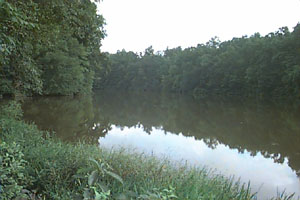
pulled in via a pump station located on Polecat Creek. The water is mixed with
Aluminum Sulfate (Alum), Sodium Hydroxide (Caustic), and
Chlorine immediately upon entering the plant. The
water is allowed to mix with these chemicals to remove any
dirt particles and bacteria that may be present in the
source water. After the mixing process, Powdered
Activated Carbon is added to combat the taste and odor
that is present in the water. With the carbon added
to the water, it is allowed to settle for approximately two
hours to allow
located on Polecat Creek. The water is mixed with
Aluminum Sulfate (Alum), Sodium Hydroxide (Caustic), and
Chlorine immediately upon entering the plant. The
water is allowed to mix with these chemicals to remove any
dirt particles and bacteria that may be present in the
source water. After the mixing process, Powdered
Activated Carbon is added to combat the taste and odor
that is present in the water. With the carbon added
to the water, it is allowed to settle for approximately two
hours to allow the heavier particles to fall out into the
four large settling basins
located on the plant grounds. After the settling
process, the water is ran through a filter to remove any
particles that did not settle out. Chlorine is then added
as well as a corrosion inhibitor. The water is then
put into storage tanks to be pumped into the elevated
tanks around town when needed.
the heavier particles to fall out into the
four large settling basins
located on the plant grounds. After the settling
process, the water is ran through a filter to remove any
particles that did not settle out. Chlorine is then added
as well as a corrosion inhibitor. The water is then
put into storage tanks to be pumped into the elevated
tanks around town when needed.
The chemicals that are
applied and the point of application has changed
considerably, and the regulations placed on the quality of
water have become more stringent, but the process has
remained the same for the past 55 years of operation at
the water plant.
|
|
|